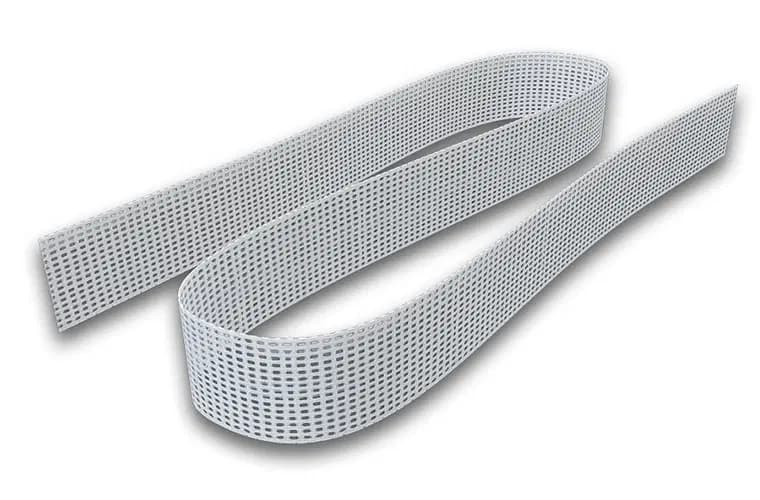
Extensor Mechanism Tendon Reconstruction with Poly-Tape
An extensor mechanism tendon rupture is a debilitating, though relatively uncommon, injury that requires prompt and effective treatment.
Reconstruction using Poly-Tape provides a straightforward solution with reliable, “off-the-shelf” components. This technique enables early mobilisation, supporting faster rehabilitation and recovery.
Backed by multiple published clinical studies, Poly-Tape reconstruction has consistently demonstrated excellent functional outcomes and long-term patient benefits.
Established clinical history
Studies have been published since 2008 treating a total of 88 knees for either patellar tendon or quadriceps tendon rupture with good functional outcomes. The earliest study used 20 mm tape, currently 30 mm tape is used. A Clinical Summary is available.
• Good function restored across all studies (different scoring systems used)
• Low levels of extensor lag and good range of motion
• Low complication rates – re-rupture rate lower than reported in state-of-the-art literature
Designed for success
Simple Solution -
- Straightforward technique for occasional need
- Long shelf-life synthetic tapes can be held in stock for prompt use
- None of the risks or availability problems of allograft
- No donor site morbidity as encountered with autograft
For Reliable Results -
- Provides excellent intrinsic strength and allows early mobilization
- Broad, stiff tape to reduce stretch in the repair – a risk factor for extensor lag
- Permanent implant – leave in place. Open weave structure of Poly-Tape allows a natural body response whereby native tissue integrates into the device
- Flat low-profile
Poly-Tape for Patellar Tendon Reconstruction Virtual Model
How it works
Step 1. A 4.5 mm hole is drilled from the lateral side
Step 2. The Poly-Tape is passed transversely through the distal quadriceps tendon at its patellar insertion
Step 3. The Poly-Tape is crossed over itself and the medial end is passed through the bone tunnel
Step 4.
Both ends are secured to the lateral tibial metaphysis by knotting the free ends of the Poly-Tape. Alternatively, two bone staples can be used under the cover of the tibialis anterior muscle
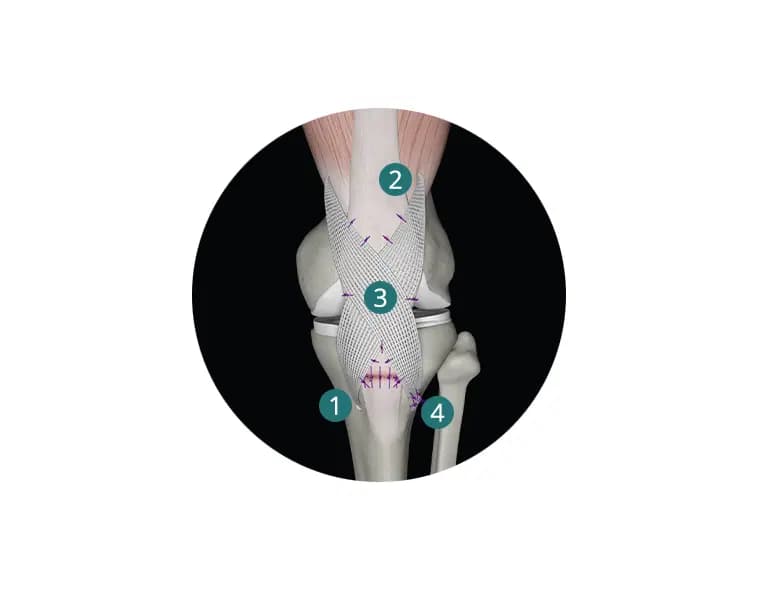
Poly-Tape for Patellar Tendon Reconstruction Surgical Technique Animation
Poly-Tape for Patellar Tendon Reconstruction In Situ Animation
Product Information
Ordering Information
The technique uses a 30 mm width Poly-Tape, probes and a 4.5 mm drill bit.
For UK and Australia, these are available as a kit with one order code, details here
Order codes for EU and other countries:
102-1083 Poly-Tape, 30 mm x 800 mm (open weave)
202-3026 Malleable probe with eye, stainless steel, 20 cm
202-3023 Rigid probe with eye, stainless steel, 20 cm
Recommended technique requires a drill bit, 4.5 mm diameter, not available from Xiros
Indications
The Poly-Tape is indicated for patients requiring patellar tendon reconstruction.
It is particularly recommended for cases with delayed diagnosis.
Instructions For Use
To view the Instructions for Use please visit our IFU Library
Related Products
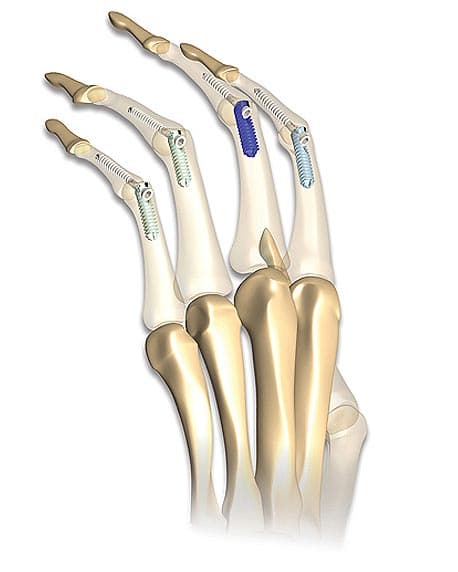
APEX™ – Interphalangeal Fusion
Features: Stable intramedullary fixation Implant compresses across joint Choice of 30 or 45 degree angle…
Discover more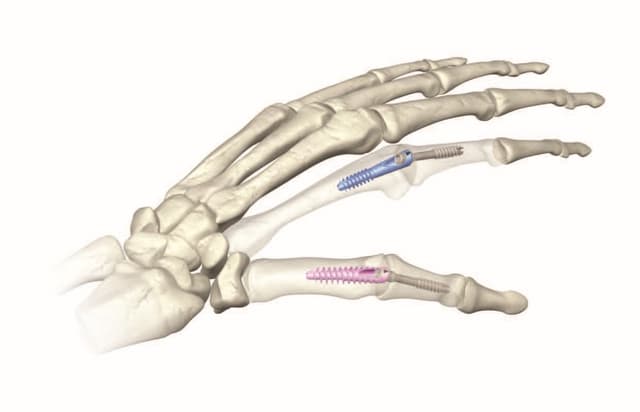
XMCP™ – Metacarpal Phalangeal Fusion
The Extremity Medical XMCP Intramedullary Fusion Device is intended for fixation arthrodesis of the metacarpal-phalangeal joints.…
Discover more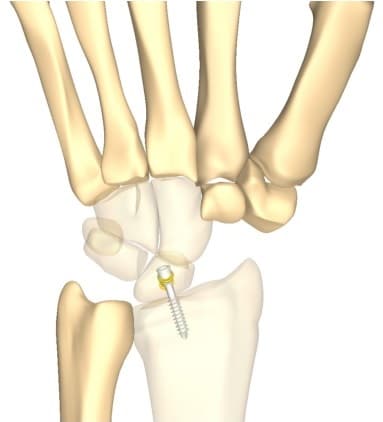
CarpalFiX™ – Carpal Fusions
The Extremity Medical CarpalFiX IntraOsseous Fixation Device is intended for the reduction and internal fixation of…
Discover more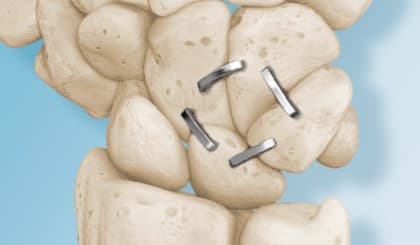
NeoSpan® SE Compression Staples for Hand
Features: Low-Profile Inside / Outside stepped-tooth design that resists pullout Available in multiple sizes…
Discover more